


Introduction
What are Managed Communication Services? Why are telecom operators moving away from building and managing everything in-house?
Managed Communication Services or MCS shift some or all of the burden of deploying and monitoring an organization’s telecommunications and data network infrastructure to a trusted third party.
To understand why a managed service model should be a priority for decision-makers now, it’s important to consider how the international voice and messaging sector is evolving – and the challenges that its development is now imposing on operators worldwide.
A Changing Landscape for International Voice and Messaging
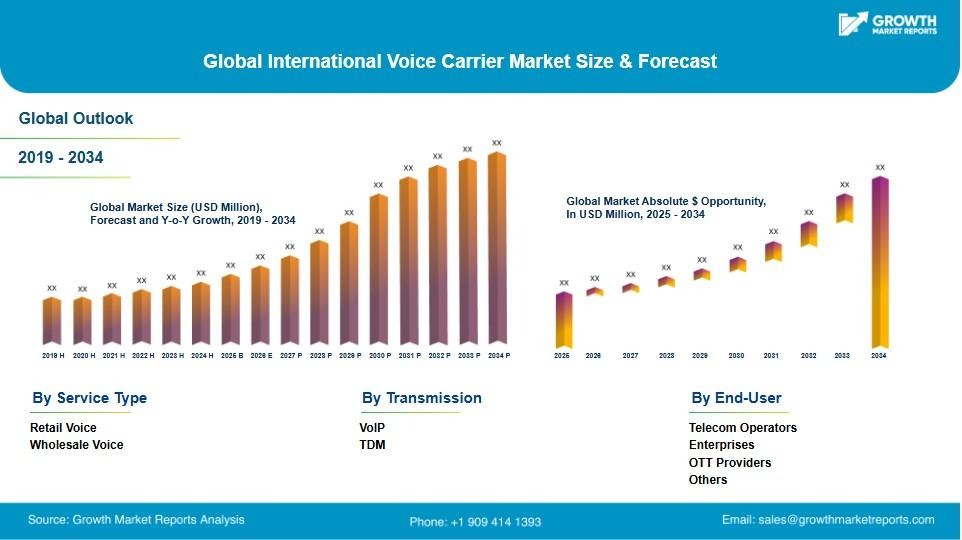
The continuing demand for cross-border voice communication services has led to a growth in the International Voice Carrier market, from a global size of 19.7 billion US dollars in 2024, to a projected US$30.2 billion by 2033. Enterprise and consumer demand for international connectivity, the digital transformation of telecommunications infrastructure, and the spread of CPaaS technologies are fueling this market expansion.
Growth Market Reports’ International Voice Carrier Market Research Report 2033 paints the picture as follows:
[Image source: Growth Market Reports.com]
Asia Pacific (APAC) continues to dominate the International Voice Carrier market, while advances in telecom infrastructure and rising demand mark Latin America, the Middle East, and Africa as emerging regions of high potential. North America and Europe continue to present significant markets, with their high proportion of multinational enterprises, and the prevalence of advanced communication technologies.
The thriving mobile device market and the resurgence of international travel are promoting growth in retail voice services targeting small businesses and end consumers. As carriers look to offer end-to-end solutions addressing the needs of both individual consumers and enterprise clients, the retail and wholesale segments are increasingly converging. However, both retail and wholesale voice carriers continue to face significant challenges.
Challenges to International Voice and Messaging Operations
Voice tariffs continue to decline, regulatory compliance places strict demands, and Over-The-Top (OTT) services pose an existential threat. In response, many carriers are exploring new sources of revenue, such as value-added services, managed voice services, and partnerships with OTT providers.
With trans-global communication routes becoming more complex, telecom operators are looking to partner with carriers to help optimize routing, reduce costs, and ensure high-quality service delivery.
Telecom fraud management remains a serious challenge for many. When customers lose out (even indirectly) to telecom fraud, they are likely to lose trust in their providers. As a result, they may switch brands, or lash out in the form of bad reviews online, on social media, and by word of mouth This can cause damage to an operator’s reputation, and loss of direct revenue. Operators may also suffer legal action, regulatory penalties, or class action lawsuits.
The threat landscape is getting bigger, with more and more companies going digital. This is causing subscription fraud to increase. Social media platforms are giving bad actors a way to pretend to be legitimate businesses so they can try to get sensitive information from users. Advanced Machine Learning and Artificial Intelligence can help create videos and scripts so good they can fool the best Know Your Customer verification systems. With many mobile users now turning to virtual cards or eSIMs to reach regional phone networks, hackers may gain opportunities to access and control customers’ phones.
To attract enterprise customers, international carriers must now provide tailored solutions that combine voice, messaging, and data services. There’s also a demand for advanced features such as call recording, analytics, and security. Carriers are coming under increasing pressure to make bigger investments in advanced technologies, improve their operational efficiency, and develop strategic partnerships.
Among the strategic partnership options available to enterprise customers is a shift from in-house resource handling to managed voice services and telecom managed services.
In-House Management or Managed Communication Services?
Organizations that opt for in-house management must typically purchase and maintain their own telecommunications system. They also have to manage vendor relationships, and take responsibility for upgrades, maintenance, and technical support. This approach typically involves significant upfront investments, a need for technical expertise, and continuous oversight.
While most operators have the backbone to handle their carrier relationships, the cost and time of managing the day to day operations and interconnects is something many would like to do without.
In a Managed Communication Services scenario, responsibility for these functions shifts in whole or in part to a third-party Managed Service Provider or MSP. This entity may handle the full cycle from network and implementation to performance monitoring and troubleshooting. Allowing them instead to focus on their core customers.
Telecom managed services providers can call upon a retinue of certified professionals who specialize in various aspects of business communication, such as maintaining network uptime, integrating new technologies, and ensuring secure data transmission. For example, IDT Global specializes in managing carrier interconnects, smart routing and monitoring, fraud prevention, and operational complexity.
Using Managed Communication Services gives organizations of all types and sizes access to expert support, modern communications technology, and reliable connectivity. It also frees decision-makers in these organizations to focus on their core competencies, business objectives, and operations.
Under a purely managed voice services model, businesses retain strategic control over their telecommunications infrastructure. A service provider takes on the tasks of day-to-day management. However, companies may have unique business requirements, such as maintaining custody of customer information, or meeting regulatory compliance demands. In such cases, they may choose a hybrid managed telecom services scenario. The client might for example manage the routing of their service, while the service provider manages security and the network firewall.
The Commercial and Operational Benefits of Managed Communication Services
Note that the points outlined above are just some of the benefits of embracing telecom managed services. There are other advantages, such as:
Reduction in CAPEX and OPEX
Significant capital investment in hardware, software licenses, and maintaining infrastructure generally accompanies in-house communications management. Businesses must also budget for the recruitment and training of specialist staff. If an organization is expanding its footprint locally or at a wider scale, this financial burden may increase to the point where it no longer remains viable.
Under a telecom managed services contract, clients will typically pay a predictable monthly subscription fee or per transaction handling fee. This approach allows businesses to convert fixed operational costs into predictable, scalable OPEX frameworks. Using economies of scale, wholesale telecom outsourcing enables managed service providers to negotiate favorable rates with carriers and equipment vendors – and pass these savings on to their clients.
Access to Expertise and Technical Support
Telecom managed services employ teams with deep technical expertise. They may also invest heavily in training, certifications, and partnerships to ensure that these teams are familiar with the latest technologies and techniques.
24/7 technical support is now the benchmark standard. Service providers will also use strategies that minimize the risk of downtime, such as redundant systems, automated failover, and advanced monitoring. Modern providers may also offer proactive performance optimization, which uses real-time analysis of network traffic patterns, application performance, and user experience. They may also use Quality of Service (QoS) configurations, to ensure that essential business functions maintain optimal performance even when network resources are under strain.
Flexibility
Managed Communication Services enable clients to readily adapt to business growth, without having to worry about the increased capital outlay and recurring costs of outfitting new branch offices and facilities. With wholesale telecom outsourcing, even the largest enterprise consumers can adjust their communications infrastructure to cope with changing conditions.
Depending on the range of services required and the complexity of your network infrastructure, typical deployments range from 30 to 90 days. Adjustments to existing systems can occur within a single day. Flexibility like this enables clients to support modern workplace requirements such as providing for hybrid and remote staff.
Telecom Fraud Management
Managed voice services use a combination of proactive monitoring, real-time data analysis, and automation to implement telecom fraud management at scale. Carriers and providers will typically employ a layered detection strategy that may include network traffic monitoring, Call Detail Record (CDR) analysis, SIM and number intelligence, AI-based anomaly detection, and behavioral biometrics.
Choosing the Right Managed Services Partner
You should look for a managed voice services provider that has experience with organizations in your industry which are of similar size and complexity to your own. The provider should be able to supply certifications, case studies, and customer references that prove their technical expertise in relevant technologies and industry best practices.
Your Managed Communication Services partner should offer Service Level Agreements (SLAs) with uptime guarantees, response times, and performance metrics that are in line with your business requirements. These documents should spell out clear escalation procedures and contingency measures in cases of service failure.
Your partner should have the flexibility to adapt their services for future growth and changing business requirements. Look for an organization with an established reputation, and a proven track record.
About IDT Global
Drawing on over 30 years of experience in international communications, IDT Global offers both wholesale expertise and retail scale. A leader in international voice, messaging, and digital services, IDT Global helps operators worldwide secure revenue, eliminate fraud, optimize routing, and unlock new digital growth opportunities.
To learn more about how IDT global can help your organization visit us at https://idtglobal.com/mcs/

